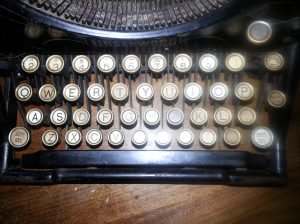
Where Writing Takes Us…or following YOUR STORY

Being caught up in life and a bit stuck on the next installment of Cara Bay, I decided to enter a few words on writing. I mean, how many of us honestly prefer talking about writing over struggling through the real thing?

Just a Note: This post is appearing both here and on my substack, “Do You Know Where YOUR Story Is?” Thanks to those here who read my stories at that site.


Someplace in my various essays, I wrote about starting to write at age 11, with a long story hand-scribbled in a notebook dotted by messy gobs of ink. It was something about a vase of flowers and a bunch—at least one, anyway—of fairies. I had never enjoyed myself more or felt more industrious than when I finished that story. I was a writer. Or would be. I knew it in my very deepest soul.

You could be a writer and still be anything else, too, right? Plus, you could write without end, like—until you were dead. Or something like that.

Well—um, sure. You’re 11. Believe that.

Okay, I’m not famous, and I can’t claim to have made oodles of cash from my writing. But it has taken me interesting places and given me opportunities to do things I might not have. Kind of a la George Plimpton without the frills and entree into celebrity society.

Still, I’ve been lucky enough to interview race car drivers about how they get their meals at the track—meeting their personal chefs, getting to hang out in the pits at Bristol Motor Speedway and discovering how good race track barbecue can be. I took my first small airplane ride; I swear the white knuckles did not affect my note-taking. I’ve talked with breast cancer survivors, mobile auto mechanics, and Habitat for Humanity recipients working to build their first owned home. Coaches, teachers, Chambers of Commerce. A retired major taking his place in the community at the head of one of our civic agencies. And I attended a hot puppy yoga class; it was only for observation, but I loved the owner’s take on how she treated both humans and canines.

A Lot of it? Perspective: My first assignment was to interview a retiring Army chaplain. Knowing that chaplains are there for the troops and not for battle, I asked him about what else he did with his time. Turns out he was in charge of something you might call community relations. For him, that meant helping locals rebuild things like schools and hospitals from the destruction war had wrought. The goal was not simply to free the people from their conquerors, but to help rebuild their lives and heal, making new international friends in the process. Huh. Wonder where that kind of chaplain is today?

Sometimes, my subjects let me know how much they liked my article about them. There’s validation in that, but also appreciation to warm your soul.

Love of writing allowed me insight into what teachers face, as I volunteered to run a writing club at my kids’ schools. (This was done with a hard line caveat: I AM NOT a teacher. I can coach writing and share what I know. I CANNOT TEACH.) Working with the kids, I was able to see the trials teachers endure, and to feel the satisfaction when a student ‘gets it’ and wants more.

There’s a lot I haven’t done. I haven’t received awards. I haven’t written a best seller. I haven’t done workshops at any big conferences. However, I was able to meet and converse with other writers higher up on the ladder than me. Including getting some cool advice while driving one of our guest speakers back and forth from his hotel. Thank you Larry Brooks.

Occasionally my work gave me celebrity access. NASCAR drivers for one. And I interviewed Al Roker by phone about his barbecue book while he was covering the Olympics. But, everyone is a celebrity to someone. Ordinary people have compelling stories of their own. Writing their stories added quality to my life, giving me new perspectives and making me tackle subject matter I might otherwise have missed. I was always learning.

And always, ALWAYS, there is fodder for the fiction I write. I’ve learned to smuggle those incidents in carefully—lawsuits and ranting neighbors and all that. But besides plot and scene material, there’s the hopes and dreams and philosophies of people I’ve met that’s woven into my work. Frequently they shared perspectives different from my own. Many had dedicated their lives to careers that—while sources of income—were also providing resources and help to their communities. When we look around, it is amazing how many people work at jobs more for what their soul gets out of it, rather than the mere acquisition of money.

Writing IS always with you, even if you don’t make much money from it. A very few people like it that way. They write personal journals to highlight their lives and help them make their way through. Some share their written private thoughts with only a few close friends. Clearly, the payback from friends makes it worth the effort. Journalists obviously write for a living—or at least for pay—but I will bet it’s only a handful for whom that is the only reason. Novelists could be described as getting the best of both worlds.

Most of us write because it is, most simply, what we do and what (rather than who) we are. The exposure and experiences we go through and the friends we make are enriching enough. And the growth it encourages from seeing more of the world in greater human detail, with all it’s variations, is invaluable. I will never understand the mentality that does not grasp that people were created—intentionally—to be strange and different and full of contradictory ideas and astonishing habits. Humankind is not here to be homogenized. It is here to be engaged, embraced, and celebrated.

So, don’t give up your writing. Not for any reason other than the most compelling and unavoidable. Write for pay, write for pleasure, but definitely write for the intangible personal gains. You will go so many places.

Writing Prompts

Aha! thought I was going to set up a writing prompt for you, didnja?

Well, no, sorry. I mean, maybe, at the end, for the comments ….we’ll see.

There are a lot of places you find writing prompts. Writing groups use them to stimulate writers at their meetings. Workshops often include them. Now I find that some of my social media ‘starts me off’ with an (unwelcome) writing prompt. I actually don’t use them much myself— not because I don’t think they have value; I just don’t have time to devote to them because I have so much in my tbw (to-be-written) pile.

Writing prompts are good for warm-ups’—flexing the fingers and the brain to put together words on the keyboard or notepad. They’re good for when you feel like writing but don’t have an urgent project and want to start something different. They can be good for working out problems with an wip (work-in-progress), but I don’t count that as working from a writing prompt. I call that writing.

I mostly use them in groups — note: I give them out, I don’t write from them; see above— when I’m working with people who know they want to write but don’t know what they want to write about or they don’t know how to start. It’s how I get them to open up and find where to begin. The goal there is to help them discover their own process and show them they can prime the pump. Which is the only way I use writing prompts myself. Here goes.

I use a simple formula with a minimum of props. It sort of depends on the writers I’m working with. If they are totally clueless about what to write, I get very specific.

I set up 3 criteria. I tell them: Pick a color. Pick an animal. Pick a place. The writers do the picking. They write down their answers in a list for reference.

Okay, next I say: Now I want you to write a paragraph of at least 10 sentences that starts a story with those 3 things in it. Yes, you may write a second paragraph if you need to. Then, after a somewhat lengthy but sketchy explanation of what a paragraph is, why do we need them, and how do I know when to start a new one, they start writing.

Then, I say, in tones that reminisce of a game show host offering up a ‘curve ball’: Oh, by the way, you have to include a monkey in your story. Or a fire, or the Eiffel Tower, or popcorn — you get the drift.

What we’ve done is to create — with their own involvement — a set of parameters in which they must write. Far from being restrictive, these parameters challenge the writer’s creativity in meeting them while at the same time giving them fodder to chew on and feed the creative process. Plus, eventually, it’s an exercise a person can do on their own.

Why would they?

That’s when I use it. Because you can take your problem-child story, the one you can’t get started on, and line up 3 choices (maybe more, once you are used to this process, but I’d stop at 6.)

If it’s a character that’s giving you problems, you can work with that character. Use their gender (biological or psychological), their age (ditto), and a food they hate (or anything else they might have feelings or thoughts about). Now, put them in a situation, eg, Character has just arrived at a crowded restaurant and waited 45 minutes for a table. She goes to order and learns they only serve fish and seafood, which she wouldn’t touch even if she were eating with the Pope—(okay, so she’s Catholic in this instance). How would she respond? A writer kind of can’t help playing What If? with that scenario, and bending their writing to meet the parameters results in consequences the writer has to include.

It also allows (forces?) them to explore their character in a dimension different than the storyline they will ultimately inhabit, which will give the writer more insight into them. It can be a great way to build your character’s backstory and discover things about them you never planned to write. Goal met.


I said I wasn’t going to do this, but here are the parameters…

  1. Choose a color, but not a primary color
  2. Choose 1 from Earth, Wind, Fire
  3. Choose an ice cream flavor — any one that you’ve heard of

Now, write a 7-sentence paragraph to introduce a new character in a scene.

Leave a copy in the comments; I’d love to see what you write.

Dedication, Determination, and Discipline

… one means to an end. (a variation of this post appears on my substack: “Do You Know Where YOUR Story Is?”)

Someone in a group commented on what they perceived as my persistence or dedication in writing. I generally have 3 to 4 manuscripts underway, sitting on various burners in my creative fire. The person’s comment got me to thinking about how I reached this point.

To be fair, I’ve spent a large part of my life not working outside the home. That time was mostly spent raising our children and volunteering as a writing coach in their schools. On the side I freelanced with reviews of computer software and cookbooks, as well as writing feature articles for various magazines and local papers. Having publications that were interested by my spec articles and thereby interested in paying me to write for them helped me learn to be more business-like about my writing.

As I grew into writing book-length fiction, I was also learning about self-publishing (a story for another day). The thing about book-length fiction, whether ultimately traditionally or self- published, is that it takes time, and time—for everyone—is at a premium.

I learned my best way around that when I participated in NaNaWriMo, the event where you promise to write 50,000 words in 1 month. Now, that can only be done one way: sit down and do it.

How do you do that? You have to choose whatever method works best for you. For me it was a perpetual glass of iced tea, music or low TV in the background, a sign that warned “Do Not Disturb Unless There’s Blood” and either paper and pen or computer in front of me. (Despite being a computer geek of sorts, I also like writing notes/outlines/troublesome scenes in pen.)

It was through NaNoWriMo that I discovered Scrivener from Literature and Latte, a program which allows you to make different kinds of notes, organize them, or simply write and compile your manuscript. An automatic feature keeps track of word count for each session and the entire project. (Trust me, there’s a lot more to it than that, but check out the link for a better idea of its features.)

Some NaNoWriMo participants like to meet together at a library for a couple hours of writing–a “write-in”. Others prefer absolute solitude. As a mom, well, neither of those were likely scenarios, but I managed many late-night sessions working in the reflected light of the computer.

The bigger point of all this was I learned to take my writing seriously. Instead of having to answer to an external editor or deadline, I had to answer to myself. I had to organize my work sessions in such a way that I could meet the word count goal while turning out a reasonable, or at least manageable, draft.

And the way I did this goes back to Scrivener’s organizational medium. See, Scrivener sets up your components under one umbrella. You can think of it like a box; it contains your writing materials, your notes, your character sketches, your setting descriptions, your research, your outline–if you use one, and your actual manuscript. Each of those things has a place in the box, and the result of their combined functions will culminate in your manuscript. The box would be labeled “Project”.

“Project” is how Scrivener labels the whole of the parts involved in you creating your manuscript. And “Project” is how you should think of it. “Project” is a formal word, often used in business or at many kinds of work or school. A project has deadlines. It has purpose, goals. A project carries its own importance–projects must always be completed.

That is the psychological trick you can play on yourself to give your unfinished work validation and the importance it needs to stay on your radar and be completed. Your work commands respect simply because you are doing it; you are trying to create something out of whole cloth. If you are passionate about the story or novel you are trying to write, then the question of completion is a non-issue. The trick is in figuring out how to do it, how to find your own story.

Getting to publication is still part of the noveling process. Writing it is certainly the bulk of it, but if our goal really is publication, we owe it to ourselves–and to our stories–to be business-like about the entire process.

I don’t necessarily mean creating a 9-to-5 work schedule, although that will work for some. At-home parents recognize that a stern schedule is pretty much out of the question, but you can reserve hours of your day—or a certain number of hours (or minutes) per day to aim for. It’s taking it seriously that matters.

Also, keep records of writing-related activities: how many hours did you spend writing last week? How much time did you devote to research or finding new markets for your work? You can keep track of your time to gauge either productivity or dedication. How many stories have you submitted to a publisher, be it magazine or book or online site? You should be tracking what is going on with every story you write once it is complete and ready to fly on its own. That is to say, you should know where each story is in its process. Make sure it gets out of the nest and stays in the air until it lands on a perch that says ‘sold’. Yup, that means keeping track of every rejection, too. Oh come on, the greatest publishing stories begin with a massive number of rejections before the longed-for acceptance notice. You want to celebrate it right, don’t you? Keep track of the numbers.

And don’t forget to keep track of the materials and equipment you use in writing—for taxes. Even as a small-time journalist, I was able to deduct mileage used in getting to and from interviews. And while you need to be cautious, you might be able to deduct other expenses. Self-publishers need to track sales, because at a certain point, you will need to pay taxes on the income they generate, and if you are selling in person, you will have inventory numbers to keep track of. I’m digressing into a rabbit hole, but you get my point.

All of this began with my undertaking not simply ‘trying to write a novel’ but a Project, something I was building, something I was going to complete. So much of the process is about attitude. If you are writing for publication, then you are a creative entrepreneur, and you need to take it seriously and be business-like about it. Even if you don’t like the entrepreneurial side of things.

The published professional has learned how important it is to do things right. If you want to join the ranks of published authors, it’s it is time to include some professional business tasks in your process. Balance out the creative process with taking care of business as well. By making the whole effort into a project, you’ll have channeled that dedication and discipline into a completed work. And isn’t that what the noveling process is about?